
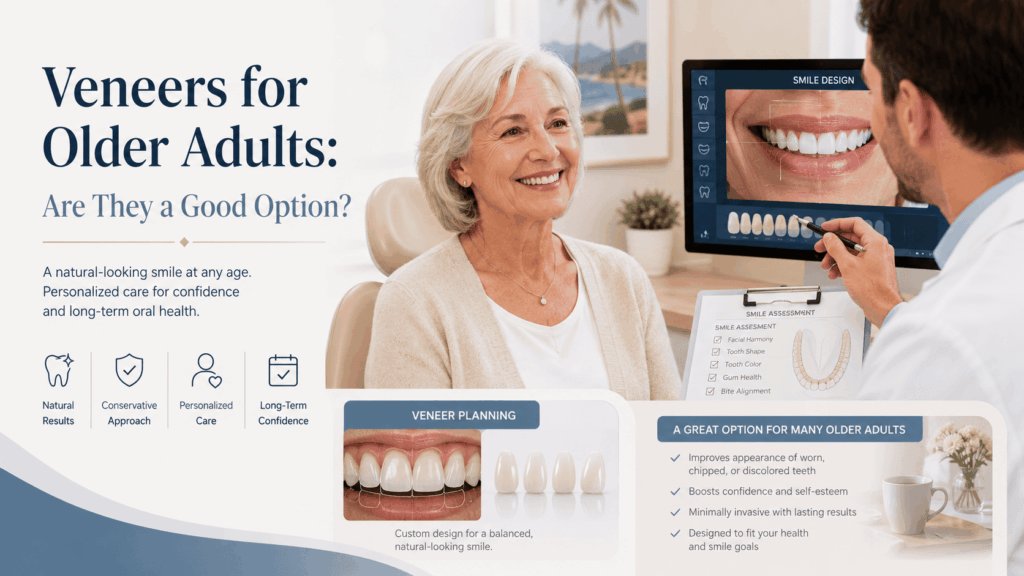
After years of putting your smile goals aside, you may finally feel ready for veneers. Then a question often appears: does age change your chances of success?
Concerns about thinner enamel, changing gums, or previous dental issues can make the decision feel uncertain. However, age alone does not determine whether veneers make sense. Your current oral health, tooth condition, and smile goals matter far more than your age.
Does Age Disqualify Anyone From Getting Veneers?
No specific age automatically prevents someone from getting veneers. Your dentist looks at your gum health, enamel condition, bite, and overall oral health first.
A 70-year-old with healthy gums and strong teeth may qualify more easily than a younger patient with untreated dental problems. Age gives your dentist useful context, but it does not make the decision alone.
How Teeth and Gums Change With Age
Your teeth and gums change over time, and those changes can affect veneer planning. A thorough evaluation helps your dentist determine what approach fits your smile.
Enamel Thinning and Wear
Years of chewing, acidic foods, drinks, and grinding can gradually wear enamel. Teeth may become shorter, more sensitive, or easier to chip as enamel becomes thinner.
Veneers rely on the existing tooth structure for support. Your dentist checks how much healthy enamel remains before recommending treatment.
Gum Recession
Some people experience gum recession as they get older. This process exposes more of the tooth root and can change the appearance of the gumline.
Gum recession can also affect veneer design. Your dentist needs to consider the gumline carefully to create a natural-looking result.
Healthy gums provide an important foundation for cosmetic treatment, so your dentist may address gum concerns before planning veneers.
Tooth Color Changes
Teeth often develop a darker or more yellow appearance over time. This happens partly because enamel becomes thinner and reveals more of the naturally darker dentin underneath.
This change does not mean you have poor oral hygiene. Your dentist considers your natural tooth colour during shade planning, especially when treating only certain teeth.
What Dentists Evaluate Before Recommending Veneers for Older Patients
A dentist does not use age alone to determine veneer candidacy. Instead, they evaluate several factors that affect your smile, oral health, and treatment outcome.
Gum and Periodontal Health
Healthy, stable gums create a stronger foundation for veneer treatment. If you have active gum disease, your dentist may recommend treating it before cosmetic work.
Inflamed or unstable gum tissue can affect how veneers look and function over time. Advanced periodontal disease can also weaken the bone supporting your teeth. Your dentist considers this when evaluating whether veneers are appropriate.
Bite and Wear Patterns
Years of chewing, grinding, or clenching can change how your teeth meet. These habits can also affect how much pressure your teeth handle.
Your dentist evaluates your bite and wear patterns before designing veneers. This helps them choose materials and designs that suit your specific needs.
Dry Mouth and Medications
Dry mouth, also called xerostomia, becomes more common with age. Certain medications for conditions like blood pressure, depression, and allergies can contribute to it.
Cleveland Clinic notes that dry mouth can increase the risk of tooth decay and gum disease. This matters because decay near a veneer’s edge can affect the restoration over time.
If dry mouth affects you, your dentist may suggest managing it before or alongside cosmetic treatment.
Existing Restorations
Many older adults have existing dental work, including fillings, crowns, or previous cosmetic treatments. These restorations can influence shade matching, treatment planning, and the final appearance.
Your dentist reviews your existing restorations before deciding which teeth need treatment. They also consider how new veneers will blend with your current smile.
Overall Medical History
Your overall health can influence how your dentist plans treatment. Conditions such as diabetes or certain heart conditions may affect healing and gum health.
Some medications may also influence your treatment plan. Sharing your complete medical history helps your dentist create a safer approach.
Can Veneers Be Placed if You Have Gum Recession?
In many cases, yes. However, the extent of recession and the condition of your gums matter.
Mild or moderate gum recession does not always prevent veneer treatment. Your dentist can design veneers around your existing gumline when appropriate.
More severe recession may require treatment before cosmetic work begins. Your dentist may also involve a periodontist in more complex cases.
Gum recession does not automatically rule out veneers. A proper evaluation can show whether veneers fit your specific situation.
Addressing Oral Health Concerns Before Cosmetic Treatment
If you have gum disease, decay, or other oral health concerns, your dentist will usually address those first. This applies regardless of age.
This approach does not delay cosmetic treatment without reason. Veneers need a healthy foundation to function well over time. Treating underlying problems first helps protect your smile investment.
For many older patients, treatment planning may take longer than the veneer placement itself.
Do Older Adults Need a Different Veneer Approach?
Sometimes, but not always. Some older patients want to correct one specific concern, such as a chipped tooth or noticeable discolouration. Others want to improve several teeth for a broader smile change.
Our discussion of getting veneers on just one tooth and our guide to veneers on top and bottom teeth explain how dentists plan treatment size. These considerations apply at any age, but older patients may also factor in existing dental work and long-term goals.
A full smile makeover can be an option, but it does not suit every patient exploring veneers.
Porcelain vs Composite: Does Age Change the Choice?
Age alone does not determine whether porcelain or composite veneers fit better. However, factors that can change with age may influence the decision. These include enamel condition, bite pressure, and existing restorations.
Our porcelain veneers guide and composite veneers overview explain what each material involves. our comparison of porcelain and composite veneers also covers the differences in more detail.
Your dentist considers these factors alongside your goals and oral health. They do not choose a material simply because of your age.
Cost also plays a role in the decision. Veneer costs vary based on the number of teeth treated, selected material, and case complexity. Our breakdown of what affects porcelain veneer costs explains the factors that influence pricing.
Setting Realistic Expectations
Veneers can create a noticeable improvement in your smile, but they cannot guarantee a specific outcome. Your existing teeth, gum health, and bite all influence the final result.
A thorough consultation helps you understand what veneers can realistically achieve. It also helps you explore options that fit your needs.
For many older patients, the goal is not a completely different smile. Instead, they want a refreshed and balanced version of their existing smile.
Choosing a Cosmetic Dentist in Woodland Hills for Mature Smiles
Dr. Pearl Zadeh evaluates each patient’s gum health, enamel condition, bite, and medical history before recommending treatment. She considers factors that may become more important as patients get older.
Her approach focuses on your current oral health and smile goals rather than assumptions based on age. Patients considering veneers in Woodland Hills can expect a detailed evaluation before treatment recommendations.
our overview of cosmetic dentistry in Woodland Hills explains other available options if veneers are not the best first choice.
Once you have a treatment plan, our guide to preparing for a veneers appointment explains what to expect before your visit.
Schedule a Consultation With Dr. Pearl Zadeh
Veneers may or may not suit your smile goals at this stage of life. Your dentist needs to evaluate your gums, teeth, and oral health before making a recommendation.
Dr. Pearl Zadeh and her Woodland Hills team can assess your smile and create a personalised plan based on your needs. They consider your starting point, goals, and available treatment options.
Call (818) 716-6722 or click the button below to schedule your consultation online.
Schedule a ConsultationFrequently Asked Questions
1. Am I too old to get veneers?Generally, no. Age alone doesn’t disqualify anyone. What matters more is the health of your gums, the condition of your enamel, your bite, and your overall oral health, which your dentist evaluates individually.
2. Can I get veneers if I have gum recession?In many cases, yes, depending on how significant the recession is. Mild to moderate recession can often be planned around, while more advanced cases may need treatment first.
3. Do veneers work differently for older patients?Not fundamentally, though older patients often have factors like enamel wear, existing restorations, or gum changes that shape the treatment plan differently than they might for a younger patient.
4. Will dry mouth affect my veneer candidacy?It can be a factor, since dry mouth increases the risk of decay around a veneer’s margin. Your dentist may recommend managing dry mouth as part of your overall treatment plan.
5. Do I need to fix my gums before getting veneers?If active gum disease or significant instability is present, addressing it first is generally recommended, regardless of age. A stable, healthy foundation tends to support a longer-lasting result.
Related Articles:
- Porcelain Veneers: A Practical Guide for Patients
- Composite Veneers: Everything You Need to Know
- Porcelain vs Composite Veneers: Choosing the Right Option for Your Smile
- No-Prep Veneers and Traditional Veneers: What Is the Difference?
- Preparing for Your Veneers Appointment: A Complete Guide
- Veneers vs Teeth Whitening: Which One Should You Choose?
- Dental Bonding vs Veneers: Which Option Is Right for You?
- Can Veneers Fix Crooked Teeth? What They Can and Can’t Do
- Do Dental Veneers Look Natural or Fake? What Makes the Difference