
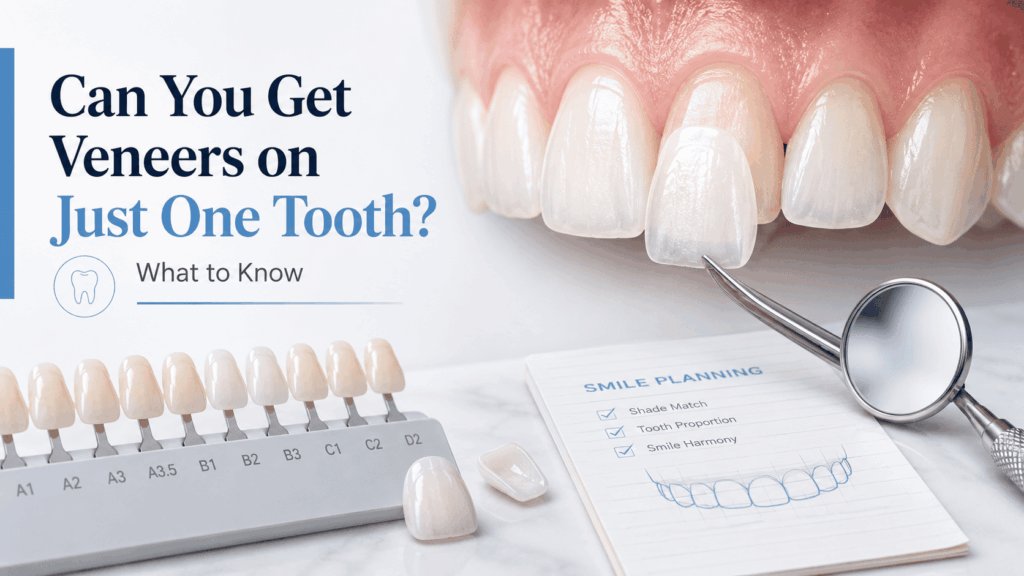
One tooth chipped years ago in an accident, or one tooth has always looked a shade darker than the rest, and you’ve put off doing anything about it because you assume fixing it means treating your whole smile. That assumption stops a lot of people from ever asking the question.
In many cases, a single tooth can be treated on its own, though whether that’s the right call depends on more than just how the tooth looks to you in the mirror.
Yes, a Single Veneer Is Often Possible
Placing a veneer on just one tooth is a legitimate, commonly performed treatment, not an exception dentists avoid. Many patients come in wanting exactly this: one chipped, discolored, or misshapen tooth addressed without touching the rest of their smile. Whether it’s the right approach for you specifically depends on how that tooth compares to its neighbors, and your dentist can determine that during an evaluation rather than from a description alone.
Situations Where a Single Veneer May Be Considered
A few common scenarios tend to bring patients in asking about treating just one tooth.
A Chipped or Worn Front Tooth
A chip from an accident, a fall, or years of minor wear on one front tooth is one of the more straightforward cases for a single veneer. If the surrounding teeth are otherwise in good shape and a similar color, treating just the affected tooth is often a reasonable starting point.
A Single Discolored Tooth That Hasn’t Responded to Whitening
Some teeth darken due to old trauma, a root canal, or other internal changes that whitening doesn’t reach, since whitening generally affects surface staining rather than internal discoloration. When one tooth stays noticeably darker than the rest despite whitening attempts, a veneer is sometimes considered as a way to cover that specific tooth rather than whitening the whole smile repeatedly with limited results.
Minor Shape Differences Between Teeth
A tooth that’s slightly shorter, narrower, or oddly shaped compared to its neighbor can sometimes be addressed with a single veneer, reshaping just that tooth to sit more evenly within the smile. This works best when the difference is cosmetic rather than related to the tooth’s actual position. If the concern is more about alignment than shape alone, how veneers relate to crooked teeth covers where cosmetic treatment helps and where it doesn’t.
A Tooth That Looks Different From Its Neighbors
Sometimes a tooth simply looks different, in texture, translucency, or subtle color, without an obvious chip or stain to point to. This can happen naturally or as a result of an old filling that’s changed color over time. A single veneer can sometimes even that difference out, though this is one of the more nuanced cases to plan for, discussed further below.
Replacing an Old Veneer on One Tooth
If an existing veneer on one tooth has chipped, discolored, or simply aged differently than the rest of your smile, replacing just that veneer is a common and often straightforward request. Your dentist evaluates the surrounding teeth and any other veneers already in place to make sure the replacement blends in, rather than assuming a simple swap will automatically match. Depending on the material involved, our comparison of porcelain and composite veneers may help you understand what a replacement might involve.
Why Some Patients Need Multiple Veneers Instead
Not every case stays limited to one tooth once a dentist takes a closer look. If several teeth show similar wear, if your natural tooth color varies significantly across your smile, or if your goals go beyond fixing one specific concern, your dentist may recommend treating more than one tooth to achieve a result that looks balanced rather than lopsided. Our breakdown of how many veneers a smile makeover typically involves goes further into how that broader decision gets made.
This isn’t about upselling you into more treatment than you need. It’s about the fact that a single veneer surrounded by teeth that don’t match well can sometimes draw more attention to the difference rather than less. A dentist recommending additional teeth is often trying to protect the natural-looking outcome you’re actually after.
The Real Challenge of a Single-Tooth Veneer
Placing a veneer on one tooth is often considered one of the more demanding procedures in cosmetic dentistry, not because the physical process is unusually complex, but because the result has to disappear convincingly next to teeth that were never touched.
Shade Matching With Surrounding Natural Teeth
When several teeth are veneered together, a dentist and lab can apply the same shade and translucency across all of them, creating built-in consistency. With a single tooth, the veneer has to be matched precisely to teeth that weren’t altered, which involves careful color analysis, sometimes multiple rounds of adjustment with the lab, and an honest conversation about how close a match is realistically achievable.
Matching Shape and Proportion
Beyond color, a single veneer also needs to reflect the size, length, and contour of the tooth next to it. Even small differences in these proportions can be noticeable up close, particularly for front teeth that people tend to look at directly when talking with you.
Porcelain vs Natural Enamel
Porcelain and natural enamel do not behave identically under light. Enamel has its own translucency and subtle variations that are difficult to fully replicate in one restoration. A single veneer may not look exactly like a natural tooth in every lighting condition. However, it can still provide an excellent match when viewed in the dental chair. Our porcelain veneers guide and composite veneers overview explain how each material affects translucency and appearance.
How Lighting Changes the Way Teeth Look
Natural teeth and porcelain do not always react to light the same way, especially under fluorescent lighting, direct sunlight, or camera flashes. A veneer that looks seamless in one setting may appear slightly different in another. This can happen with any veneer, but the difference may become more noticeable when one veneer sits beside a natural tooth.
Bite and Tooth Position
The way a tooth contacts its opposing tooth during biting matters for a single veneer, just as it does for a full set. If the tooth sits differently from its neighbour or receives extra bite force, your dentist considers this when choosing the material and designing the veneer. Uneven pressure can affect the veneer’s long-term durability.
How Dentists Decide Between One Veneer and Several
There is no fixed rule that applies to every patient. A dentist considers how well a single veneer can match, how your other teeth vary in colour and shape, and the result you want. The table below highlights general differences between the two approaches, but your dentist will base recommendations on your specific situation.
| Consideration | One Veneer | Multiple Veneers |
| Main purpose | Address an isolated concern on a single tooth | Create a coordinated, balanced look across several teeth |
| Common situations | A chip, a stubborn stain, or one misshapen tooth | Broader discoloration, several visible concerns, or a full smile makeover |
| Color matching | Must match existing natural teeth precisely, which can be difficult | Matched to each other, giving more control over the final shade |
| Smile design considerations | Limited mainly to how one tooth fits within the existing smile | Involves broader planning across width, proportion, and symmetry |
| Treatment planning | Often simpler, though shade matching adds its own complexity | More involved upfront, but shade consistency is easier to control |
If a single veneer can blend well with your smile and meet your goals, it may offer a more conservative starting point. If matching one tooth convincingly seems difficult, your dentist can explain why a broader treatment plan may work better.
Alternatives to a Single Veneer
Veneers are not the only way to address a single-tooth concern. Depending on the cause of the issue, another option may work better. Dental bonding is often a more conservative choice for minor chips or small shape corrections. It typically requires less tooth alteration and can sometimes be completed in a single visit.
Teeth whitening may help when the concern involves surface staining rather than deeper colour differences. However, it usually will not correct internal discolouration caused by an old injury or root canal. Orthodontic treatment may be a better option if the main concern involves tooth position rather than colour or shape. Simple reshaping or contouring can also help with very minor irregularities. This approach gently adjusts the tooth edge or surface without adding material, so some patients may not need veneers or bonding.
Which of these fits depends entirely on what’s actually behind the concern with that tooth, not a general preference for one option over another.
Setting Realistic Expectations for a Single Veneer
A single veneer can often look very natural, but no dentist can promise a perfect match in every lighting condition. They also cannot guarantee that it will look identical to your untreated teeth forever. The American Dental Association notes that veneers can chip, wear, or need rebonding over time, like other restorations. Your natural teeth will also continue to change colour as you age, which may affect how closely the veneer matches years later.
None of this means a single veneer is a poor choice. It means going in in with a realistic sense of what a good outcome looks like, rather than expecting permanent, flawless invisibility under every condition.
Choosing a Cosmetic Dentist in Woodland Hills for Single-Tooth Cases
Single-tooth veneers reward a dentist who takes shade matching seriously rather than treating it as a quick add-on. Dr. Pearl Zadeh’s approach to cosmetic treatment planning includes the kind of detailed shade and shape analysis that single-tooth cases require, rather than defaulting to a broader plan by default. Patients considering veneers in Woodland Hills can expect an honest conversation about whether one tooth is a realistic option for their specific smile, and our overview of cosmetic dentistry in Woodland Hills covers the fuller range of options if your case calls for something beyond a single veneer.
If a single veneer, or a small number of them, ends up being the right fit, our guide to preparing for a veneers appointment walks through what to expect, and some patients also ask about no-prep veneers as a more conservative option for smaller, single-tooth corrections.
Schedule a Consultation With Dr. Pearl Zadeh
Whether one tooth or several make sense for your smile depends on your specific teeth, not a general rule that applies to every patient asking the same question. A personalized evaluation is the only reliable way to know what a realistic, natural-looking result would involve for you.
Dr. Pearl Zadeh and her Woodland Hills team can look closely at the tooth that’s bothering you, along with the teeth around it, and walk you through whether a single veneer or a broader plan fits your goals.
Call (818) 716-6722 or click the button below to schedule your consultation online.
Schedule a ConsultationFrequently Asked Questions
1. Can you get veneers on just one tooth?In many cases, yes. A single veneer can address an isolated chip, stain, or shape concern, though your dentist will evaluate whether it can realistically match your surrounding teeth first.
2. Will one veneer look different from my natural teeth?It may, to some degree, depending on the lighting and how closely the dentist matches the shade and translucency. A careful shade-matching process can reduce noticeable differences, but it cannot guarantee a perfect match in every condition.
3. Can a single veneer match surrounding teeth?Often, yes, though dentists consider this one of the more technically demanding aspects of cosmetic dentistry. The process typically requires careful shade analysis and may involve multiple adjustments with the dental lab.
4. Should I get multiple veneers instead of one?This depends on how much your other teeth vary in color and shape, and on your overall goals. Your dentist may recommend additional teeth if matching just one convincingly isn’t realistic for your smile.
5. Can I add more veneers later?In many cases, yes, though your dentist will need to evaluate how new veneers would match the existing one in shade and shape. This is worth raising during your original consultation if it’s something you’re considering.