
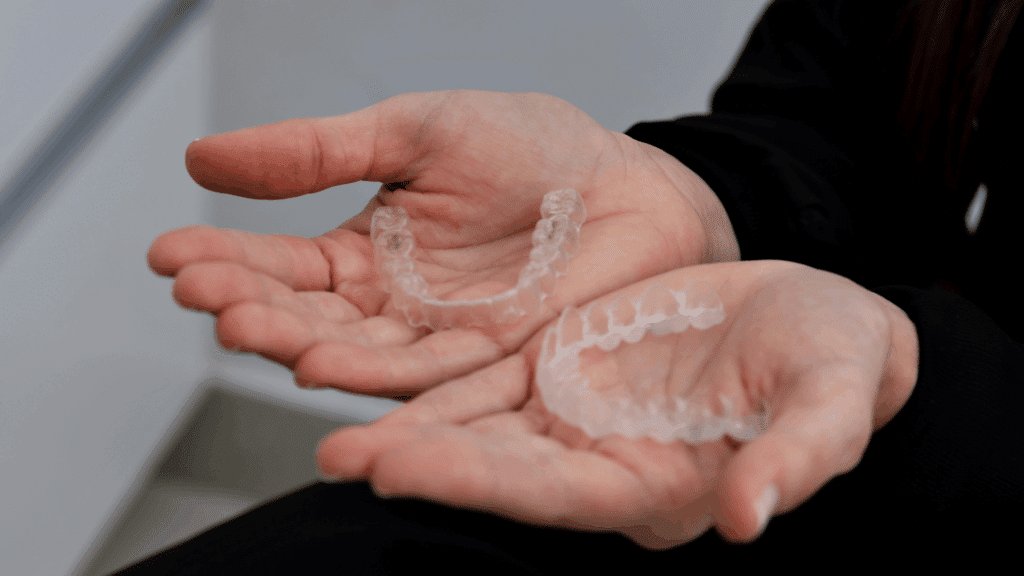
When people hear the word “Invisalign,” they often assume it works the same way for everyone. In reality, Invisalign treatment can look very different depending on how mild or severe the orthodontic issue is.
A patient with slight crowding may only need a few months of aligners. Meanwhile, someone with major bite problems or significant tooth movement may require attachments, refinements, rubber bands, or even a combination of treatments.
That’s why understanding the difference between mild and severe Invisalign cases matters before starting treatment.
In this article, we’ll break down how Invisalign works for different levels of dental misalignment, what changes during treatment, and when clear aligners may or may not be the best option.
What Is Considered a Mild Invisalign Case?
A mild Invisalign case usually involves small cosmetic or alignment issues that do not require major tooth movement.
These cases are generally simpler because the teeth only need limited adjustments.
Common Mild Cases Include:
- Slight crowding
- Small gaps between teeth
- Minor relapse after braces
- Mild crookedness
- Small rotations
- Slight overlap of front teeth
For example, someone who had braces years ago but stopped wearing their retainer may notice one or two front teeth shifting. Invisalign can often correct that type of problem relatively quickly.
Mild cases are usually easier to predict because the aligners do not need to move teeth over long distances or significantly change the bite.
What Is Considered a Severe Invisalign Case?
Severe Invisalign cases involve more complex orthodontic problems that affect both appearance and function.
These patients often need substantial tooth movement, bite correction, or jaw coordination.
Common Severe Cases Include:
- Significant crowding
- Large gaps
- Deep overbite
- Severe overbite
- Underbite
- Crossbite
- Open bite
- Teeth rotated at difficult angles
- Teeth positioned high or low in the gums
- Complex bite misalignment
In severe cases, the orthodontist must carefully plan how every tooth moves throughout treatment. Since aggressive tooth movement increases complexity, treatment often takes longer and may require additional tools.
However, Invisalign technology has improved dramatically over the years. Many cases that once required traditional braces can now be treated successfully with clear aligners.
The Biggest Differences Between Mild and Severe Invisalign Cases
Although both types of patients wear clear aligners, the treatment process can be very different.
Here are the major differences.
1. Treatment Time
Treatment duration is one of the clearest differences between mild and severe Invisalign cases.
Mild Cases
Mild Invisalign cases may take:
- 3 to 6 months
- Sometimes up to 9 months
These treatments focus on smaller cosmetic adjustments, so fewer aligners are needed.
Severe Cases
Severe cases often take:
- 12 to 24 months
- Sometimes longer for highly complex bites
More tooth movement means more aligners, more monitoring, and more refinements.
Additionally, severe cases may require multiple phases of treatment.
2. Complexity of Tooth Movement
Mild cases usually involve straightforward movements.
For example:
- Slight tilting
- Small rotations
- Closing minor gaps
Severe cases require much more advanced biomechanics.
These movements may include:
- Moving teeth vertically
- Expanding dental arches
- Correcting bite alignment
- Rotating stubborn teeth
- Shifting molars
- Coordinating upper and lower arches
Some tooth movements are naturally harder for aligners to achieve. As a result, severe cases often need extra features to improve control.
3. Attachments and Accessories
Many patients do not realize Invisalign treatment often includes small accessories.
Mild Cases
Some mild cases may need few or no attachments.
Attachments are tiny tooth-colored bumps bonded to the teeth. They help aligners grip teeth more effectively.
Severe Cases
Severe cases commonly require:
- Multiple attachments
- Precision cuts
- Elastics (rubber bands)
- Refinement trays
- Interproximal reduction (slight enamel reshaping)
These tools help guide difficult tooth movements more accurately.
For example, rubber bands may help correct bite problems that aligners alone cannot fully manage.
4. Predictability of Results
Mild cases tend to be more predictable because there are fewer complex movements involved.
If patients wear their aligners consistently, treatment usually progresses smoothly.
Severe cases carry a higher chance of adjustments during treatment.
Even with advanced digital planning, teeth do not always move exactly as expected. Some teeth respond slower than others. Because of that, patients with severe cases often need:
- Mid-treatment refinements
- Additional aligners
- Treatment extensions
That does not mean Invisalign failed. Instead, it reflects the biological reality of complex tooth movement.
5. Cost Differences
In general, severe Invisalign cases cost more than mild cases.
That happens because:
- Treatment lasts longer
- More aligners are required
- More appointments are needed
- Case planning becomes more complex
Mild Cases
Mild cases may qualify for:
- Invisalign Express
- Invisalign Lite
These systems use fewer trays and shorter treatment timelines.
Severe Cases
Complex cases typically require comprehensive Invisalign treatment.
The exact cost depends on:
- Case difficulty
- Provider experience
- Geographic location
- Treatment length
- Additional procedures
Can Invisalign Treat Severe Cases Effectively?
Yes. In many situations, Invisalign can successfully treat severe orthodontic problems.
Modern Invisalign systems use:
- Advanced 3D imaging
- SmartTrack material
- Precision attachments
- Digital treatment planning
These improvements have expanded the range of treatable cases significantly.
However, success depends heavily on the provider’s skill and the patient’s compliance.
An experienced Invisalign provider understands how to sequence tooth movement properly and recognize when aligners alone may not be enough.
When Braces May Still Be Better
Although Invisalign works well for many patients, traditional braces still have advantages in certain severe cases.
Braces may be recommended when patients have:
- Severe jaw discrepancies
- Impacted teeth
- Major skeletal issues
- Extreme rotations
- Significant vertical movement needs
In some situations, orthodontists combine Invisalign with other treatments for better outcomes.
For example:
- Invisalign plus elastics
- Invisalign before jaw surgery
- Limited braces combined with aligners
The goal is not simply choosing the “invisible” option. The goal is achieving a healthy, stable bite and long-term dental health.
Compliance Matters More in Severe Cases
One of the biggest challenges with Invisalign is patient compliance.
Unlike braces, Invisalign trays are removable.
Patients should typically wear aligners:
- 20 to 22 hours daily
Mild cases may still progress reasonably well even with occasional lapses.
Severe cases are far less forgiving.
If patients frequently remove aligners or fail to wear them consistently, treatment can:
- Stall
- Become less predictable
- Require refinements
- Take significantly longer
That is why orthodontists carefully evaluate whether a patient is a good candidate before recommending Invisalign for complex cases.
What Patients Often Misunderstand About “Severity”
Many people assume severe cases always look worse cosmetically.
That is not always true.
Sometimes a patient with relatively straight teeth may still have a serious bite problem that requires complex correction.
Meanwhile, another patient with visibly crooked teeth may actually have a simpler orthodontic case.
Severity depends on more than appearance alone.
Orthodontists evaluate:
- Bite relationship
- Tooth position
- Jaw alignment
- Bone support
- Spacing
- Crowding
- Tooth rotation
- Facial balance
That is why professional evaluation matters before choosing treatment.
How Orthodontists Determine Invisalign Complexity
During a consultation, providers usually perform:
Digital Scans
3D scans help map tooth positions precisely.
Bite Analysis
The orthodontist examines how upper and lower teeth fit together.
X-Rays
X-rays reveal roots, bone levels, and hidden dental concerns.
Treatment Simulation
Invisalign software creates a digital movement plan that predicts how teeth may shift over time.
This planning process helps determine whether the case is mild, moderate, or severe.
Are Severe Invisalign Cases More Uncomfortable?
Not necessarily, but they can involve more pressure during certain stages.
As aligners create larger movements, patients may notice:
- Increased tightness
- Soreness after tray changes
- Temporary speech adjustments
- More attachment-related irritation
Still, many patients find Invisalign more comfortable than traditional braces overall because there are no metal brackets or wires rubbing against the cheeks.
Long-Term Retention Is Important for Every Case
Whether the case is mild or severe, teeth can shift after treatment without proper retention.
Most patients need retainers after Invisalign.
Severe cases may carry a slightly higher relapse risk because the teeth underwent larger movements.
Orthodontists often recommend:
- Nighttime retainers
- Long-term retention plans
- Regular monitoring
Retention protects the investment patients made in their smile.
Choosing the Right Invisalign Treatment
Invisalign treatment varies from person to person. Mild cases may require shorter treatment and simpler adjustments, while severe cases often involve longer timelines and more detailed planning.
The best way to understand your options is through a professional evaluation. A personalized treatment plan helps determine whether Invisalign is the right fit for your smile and long-term goals.
If you’re considering Invisalign and want to find out which treatment approach is right for your smile, call (818) 716-6722 or click the button below to schedule your consultation online.
Schedule a ConsultationFrequently Asked Questions
1. Can Invisalign fix severe crowding?Yes, Invisalign can treat many severe crowding cases. However, some patients may still need tooth extraction, enamel reduction, or additional orthodontic techniques depending on the amount of crowding.
2. Does severe Invisalign treatment hurt more?Severe cases may involve stronger pressure during certain aligner stages, but discomfort is usually temporary and manageable.
3. Is Invisalign slower than braces for severe cases?Sometimes. Certain tooth movements may progress faster with braces, especially highly complex movements. However, Invisalign technology has improved significantly for advanced cases.
4. Can mild Invisalign cases skip attachments?Some mild cases may not need attachments, although many patients still benefit from them for improved precision.
5. How do I know if my Invisalign case is severe?Only a dental professional can determine case complexity after evaluating your bite, tooth position, jaw alignment, and treatment goals.
Related Articles:
- Invisalign vs. Clear Aligners: What Woodland Hills Adults Need to Know
- Common Mistakes Invisalign Patients Make and How to Avoid Them
- Can Invisalign Fix Overbite, Underbite, and Crowded Teeth?
- Retainers After Invisalign. Why They Matter and How to Care for Them
- How Invisalign Treatment Works Step by Step
- Can Invisalign Close Gaps Between Teeth? What to Expect