
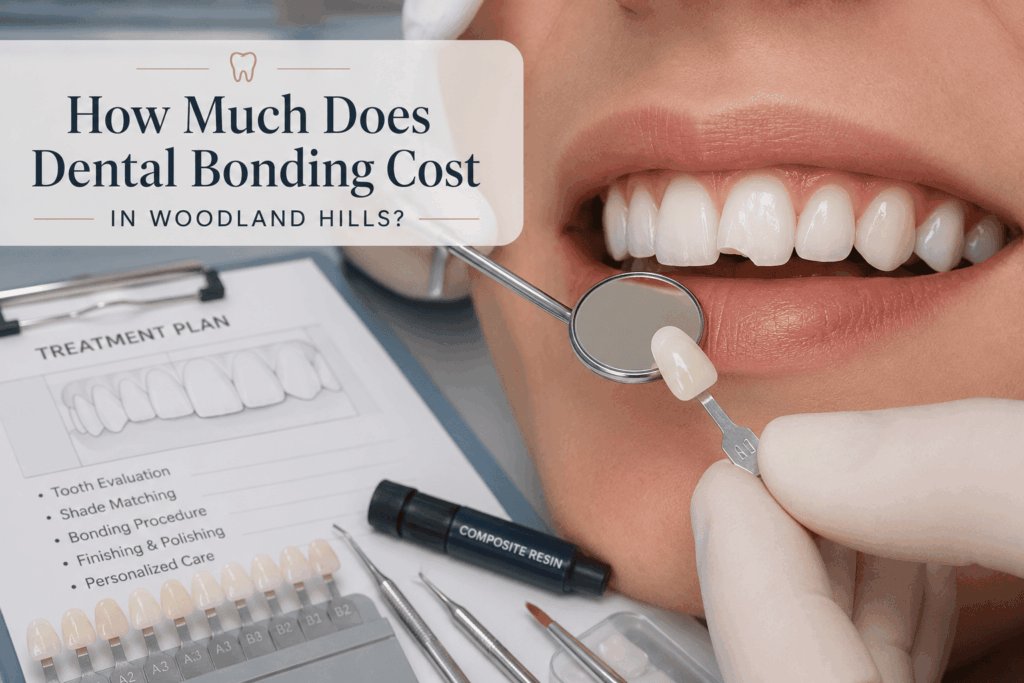
You want to repair a chipped tooth, close a small gap, or improve the appearance of one tooth that has bothered you for years. Naturally, one of your first questions is, “How much will it cost?”
The answer can feel frustrating. One website gives a low figure, another quotes something much higher, and neither explains why.
That’s because dental bonding does not have a single standard price. Every treatment is customised. The final cost depends on your teeth, your cosmetic goals, and the amount of work needed to create a natural-looking result. A personalised examination is the only reliable way to understand what your treatment is likely to involve.
Why There Isn’t a Fixed Price for Dental Bonding
Dental bonding is very different from a routine cleaning or examination. Dentists do not perform the same procedure on every patient.
Every bonded restoration is designed around the individual tooth. Your dentist considers its shape, size, colour, position, bite, and the cosmetic result you want to achieve before recommending treatment.
Two patients may both ask about repairing a chipped front tooth. One may need a simple edge repair that takes very little reshaping. The other may need the tooth rebuilt, colour matched, and blended with neighbouring teeth. Although both treatments involve bonding, they require very different amounts of planning and clinical work.
This is why responsible cosmetic dentists avoid giving exact prices before examining your smile.
Why You Cannot Compare Your Cost With Someone Else’s
Many patients ask friends what they paid or search online for average prices. While understandable, those comparisons rarely provide useful information.
Your friend’s treatment reflects their teeth, not yours.
Even two chips that appear similar can require different treatment. One may involve only enamel, while another extends deeper into the tooth. One patient may have excellent enamel for bonding, while another may have older restorations that change the treatment plan.
The same principle applies to cosmetic goals. One patient simply wants to repair damage. Another wants to improve tooth shape, symmetry, and colour at the same time.
Although both patients receive dental bonding, they are paying for different procedures.
What Actually Affects the Cost of Dental Bonding
Several factors influence the final treatment plan. Understanding them helps explain why dental bonding does not have a fixed fee.
Number of Teeth Being Treated
Treating one tooth is naturally simpler than treating several.
Each bonded tooth requires individual shade selection, careful shaping, finishing, and polishing. As more teeth become involved, the amount of planning and clinical time increases.
If your concern involves only one chipped tooth, our guide to bonding for chipped teeth explains what that treatment usually involves.
Size of the Cosmetic Correction
Not every bonding procedure requires the same amount of work.
Repairing a tiny corner chip often involves a small amount of composite resin and minimal reshaping. Rebuilding a larger section of a tooth requires additional layering, sculpting, and polishing to recreate its natural contours.
Larger corrections also demand greater precision because the repaired tooth must continue to look balanced with the surrounding teeth.
Repairing Existing Bonding or Starting Again
Older bonding does not always require complete replacement.
Sometimes your dentist can repair a small chip or refresh part of the restoration without removing the existing composite. In other situations, replacing the bonding creates a stronger and more predictable result.
The condition of the existing restoration determines which option makes the most sense. Our breakdown of repairing versus replacing old bonding explains how dentists make that decision.
Complexity of the Tooth Shape
Some teeth are straightforward to restore.
Others require careful artistic shaping to recreate natural curves, edges, and proportions.
For example, rebuilding a front tooth that catches the light every time you smile often requires far more precision than repairing a small area that rarely shows.
That additional detail requires more time, which naturally influences treatment complexity.
Our step-by-step look at how bonding works explains how dentists build and shape composite resin to create a natural appearance.
Shade Matching
One of the biggest factors patients rarely think about is colour matching.
Natural teeth contain subtle variations in shade, translucency, and brightness. Composite resin must blend with those variations rather than appear as a single flat colour.
Some smiles are straightforward to match. Others require more careful shade selection and detailed finishing to make the bonding disappear into the surrounding teeth.
This attention to detail often determines whether bonding looks obvious or completely natural.
Additional Cosmetic Treatment
Bonding sometimes forms part of a larger cosmetic plan.
Some patients combine bonding with whitening. Others receive bonding on one tooth while improving neighbouring teeth with veneers or other cosmetic treatments.
When several procedures happen together, your dentist plans them as one coordinated treatment rather than several unrelated appointments.
Your Overall Smile Goals
Your expectations influence treatment planning just as much as your teeth.
Some patients simply want to repair a small chip. Others hope to improve symmetry, reshape several teeth, or refresh their entire smile.
Those goals affect the amount of planning, shaping, and finishing required.
Your dentist also considers your bite. If you grind or clench your teeth, additional planning may help protect the restoration over time. Similar considerations appear in our discussion of veneers for patients who grind their teeth, since bite forces influence many cosmetic treatments.
Why Preserving Natural Tooth Structure May Simplify Treatment
Dental bonding is considered a conservative cosmetic treatment because it usually adds material rather than removing significant tooth structure.
When a tooth has healthy enamel and a stable foundation, your dentist often has more flexibility when shaping and placing the composite resin. This can make the treatment process more straightforward.
However, teeth with larger areas of damage, previous restorations, or other concerns may require additional planning. Your dentist may need to consider how those factors affect the strength, appearance, and long-term stability of the restoration.
How Bonding Compares With Veneers From a Planning Perspective
Dental bonding and veneers can address similar cosmetic concerns, but they use different approaches.
Bonding usually requires less preparation, fewer appointments, and no laboratory fabrication. This often makes it a more conservative and accessible option for smaller cosmetic changes.
Veneers involve custom-made shells that cover the front surface of the tooth. They require additional planning, material selection, and fabrication, which typically increases the overall treatment investment.
Cost is only one part of the decision. Your dentist also considers your tooth structure, cosmetic goals, bite, and the type of result you want to achieve. Our comparison of bonding and veneers explains the differences between these options in more detail.
Does Insurance Cover Dental Bonding?
Insurance coverage for dental bonding depends largely on the reason for treatment.
Some plans may provide benefits when bonding repairs a damaged tooth, such as one affected by a chip or decay. However, many cosmetic procedures, such as changing the shape or appearance of healthy teeth, may not receive coverage.
The American Dental Association notes that dental benefits vary widely between insurance plans. Reviewing your policy or contacting your insurance provider is the best way to understand what your plan covers.
Why Online Price Estimates Rarely Apply to You
Online cost estimates often combine many different types of bonding cases into one general number.
A small repair on one front tooth is very different from replacing older bonding on several teeth. The amount of material needed, the time required, and the level of cosmetic detail can vary significantly between patients.
Other factors, including location, dentist experience, and case complexity, also influence treatment fees. A general online estimate cannot account for the details that make your situation unique.
Why a Consultation Matters More Than a Quick Number
A consultation gives your dentist the opportunity to examine your tooth, understand your goals, and determine what type of treatment makes sense.
During this evaluation, your dentist can assess the condition of your tooth, explain your options, and provide a more accurate estimate based on your specific needs.
Instead of relying on a general price found online, a personalised consultation gives you information that applies to your actual smile.
Choosing a Cosmetic Dentist in Woodland Hills
A transparent treatment plan starts with a detailed evaluation, not a rushed estimate.
Dr. Pearl Zadeh and her Woodland Hills team take the time to evaluate each patient’s teeth, discuss their goals, and explain why a specific treatment approach may be recommended. This helps patients understand the reasoning behind their treatment plan before making a decision.
Schedule a Consultation With Dr. Pearl Zadeh
The most accurate answer to what dental bonding will cost starts with your individual smile, not a general online estimate.
Dr. Pearl Zadeh and her Woodland Hills team can evaluate your tooth, discuss your goals, and create a personalised treatment plan with an estimate based on your specific situation.
Call (818) 716-6722 or click the button below to schedule your consultation online.
Schedule a ConsultationThis article is for informational purposes only and is not a substitute for professional dental advice. Please schedule a consultation with Dr. Pearl Zadeh to discuss your specific situation.
Frequently Asked Questions
1. How much does dental bonding cost?Cost depends on your specific tooth, the extent of the correction, and your treatment goals. A consultation allows your dentist to evaluate your situation and provide a personalized estimate rather than a general figure.
2. Why do bonding prices vary so much online?Online figures are typically broad averages that combine very different cases, from small touch-ups to full replacements. They rarely reflect what a specific patient’s treatment will actually involve.
3. Is bonding cheaper than veneers?Generally, bonding involves less material and fewer visits than veneers, which often makes it a more conservative investment. Actual cost for either option depends on the specific treatment plan involved.
4. Does repairing bonding cost less than replacing it?Often, yes, since a repair typically involves less material and time than removing old bonding and starting over. Your dentist can evaluate which approach fits your situation during a consultation.
5. Can I get an exact price without a consultation?Not accurately. A meaningful estimate requires an evaluation of your specific tooth and goals, since bonding varies significantly from one patient’s case to another.