
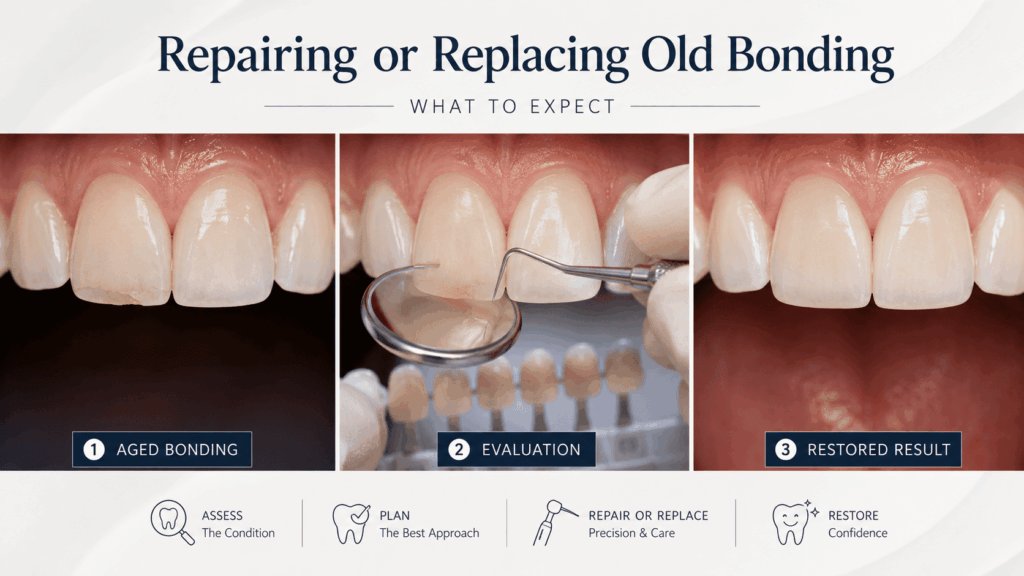
You catch your reflection and notice that your smile looks slightly different. The bonding that once blended naturally with your teeth now appears darker, feels rough against your tongue, or shows a small chip along the edge.
Changes like this do not always mean the bonding has failed. Composite bonding naturally changes over time as it experiences daily use. Sometimes a small adjustment or repair can restore the appearance. In other cases, replacing the bonding may create a better result.
The right choice depends on the condition of the bonding, the health of the tooth underneath, and what you want your smile to look like today.
Why Dental Bonding Changes Over Time
Dental bonding uses a tooth-coloured composite resin designed to repair or improve the appearance of a tooth. Although the material is durable, it does not behave exactly like natural enamel or porcelain.
Composite resin is slightly softer than these materials. Over the years, normal chewing, biting forces, and everyday habits can gradually affect its appearance and texture.
Several factors can contribute to changes in older bonding, including:
- Frequent exposure to coffee, tea, red wine, or other staining foods and drinks
- Teeth grinding or clenching that places extra pressure on the material
- Normal wear from chewing and daily use
- Changes in the surrounding natural teeth over time
These changes do not necessarily mean the original bonding was unsuccessful. Like many dental restorations, bonding requires maintenance because your teeth and materials continue to experience daily stress.
If you want to understand how bonding is placed initially, our step-by-step look at the bonding procedure explains the planning, shaping, and finishing involved.
Signs Your Bonding May Need Attention
Old bonding does not always need replacement immediately. However, certain changes can indicate that it is time for your dentist to evaluate the restoration.
The Bonding Feels Rough or Uneven
A bonded tooth should feel smooth against your tongue. If the surface starts feeling rough, raised, or different from your natural teeth, the material may have experienced surface wear.
Minor texture changes may sometimes be polished or adjusted. Your dentist can determine whether the bonding still has enough strength or needs further treatment.
The Colour No Longer Matches
Composite resin can absorb stains over time. Coffee, tea, tobacco exposure, and other staining habits may gradually affect the shade of older bonding.
Unlike natural teeth, composite material does not respond to whitening treatments in the same way. If the bonding has become noticeably darker than the surrounding teeth, replacement may provide a better colour match.
The Bonding Has Chipped or Cracked
Small chips along the edge of bonding are common, especially on front teeth that experience repeated biting forces.
A minor chip may only require a simple repair. Larger damage may require replacing more of the restoration, especially if the underlying tooth structure also needs attention.
Your Smile Goals Have Changed
Sometimes the bonding itself remains functional, but your expectations change over time.
You may want a different tooth shape, a brighter shade, or a more complete smile improvement than the original bonding provided. In these cases, your dentist may discuss whether repairing the bonding or replacing it with another cosmetic option better fits your goals.
This differs from a new chip caused by sudden damage. Our guide to bonding for chipped teeth explains how dentists approach those situations.
What Affects How Long Bonding Lasts
The lifespan of dental bonding varies from patient to patient. One person’s bonding may continue looking natural for many years, while another person’s repair may need attention sooner.
Several factors influence how well bonding holds up over time.
The location of the tooth matters. Front teeth usually experience less chewing pressure than back teeth, but they are more visible when changes occur. A small chip, edge wear, or colour difference may become noticeable sooner on front teeth because they are part of your smile.
Bite forces also play an important role. Patients who grind or clench their teeth place additional stress on bonded areas. This repeated pressure can increase the risk of wear, cracks, or chips over time.
Daily habits can affect the material too. Biting ice, chewing hard foods, or using your teeth to open packages places unnecessary pressure on bonding. Avoiding these habits helps protect both the restoration and your natural teeth.
Your oral care routine matters as well. Regular brushing, flossing, and routine dental visits help protect the tooth underneath the bonding. Good oral health also reduces the risk of problems that could affect the restoration.
Staining habits may change how bonding looks. Composite resin can absorb colour from coffee, tea, red wine, and tobacco over time. Since bonding does not whiten like natural enamel, stains may become more noticeable as the years pass.
Changes in your natural teeth can affect the overall appearance. Your surrounding teeth may naturally change colour or wear slightly with age. Sometimes older bonding stands out because the rest of your smile has changed, not because the bonding itself has deteriorated.
How a Dentist Evaluates Old Bonding
Before recommending repair or replacement, your dentist examines both the bonding and the tooth beneath it.
During the evaluation, your dentist checks:
- The condition of the bonding material
- Any chips, cracks, or rough areas
- How well the colour and shape match nearby teeth
- Whether decay or damage has developed underneath
- How your bite affects the bonded tooth
Your dentist also considers habits that may have contributed to the changes, such as teeth grinding or clenching.
The age of the bonding alone does not determine whether it needs replacement. A well-maintained restoration may remain functional for years, while newer bonding may need attention if it experiences heavy wear or damage.
When Repair Is Often the Right Approach
Repair may be the better option when the concern is small and the tooth underneath remains healthy.
For example, your dentist may repair older bonding if it has:
- A small chip along the edge
- Minor surface roughness
- Slight shape changes
- A small area that needs cosmetic refinement
A repair usually involves adding fresh composite resin to the affected area, reshaping it, and polishing the surface so it blends with the existing bonding.
This approach works best when the original bonding still provides a stable foundation and the issue is mainly cosmetic. It allows your dentist to restore the appearance without replacing the entire restoration.
When Replacement May Make More Sense
Replacing old bonding may become the better option when the restoration has reached a point where a small repair will no longer create the result you want.
Your dentist may discuss replacement if the bonding has:
- Significant wear or damage
- Deep staining that does not blend well with your smile
- Multiple repairs that have changed the shape or appearance
- A cosmetic result that no longer matches your goals
Replacement may also make sense when your expectations have changed since the original treatment. For example, you may want a different tooth shape, more length, or a more noticeable smile improvement than the original bonding provided.
In these situations, starting with a fresh restoration can give your dentist more control over the final appearance. It avoids repeatedly adding material to an older restoration that may no longer provide the ideal foundation.
If your original bonding helped close a gap and that area has changed over time, your dentist may consider whether a different approach would create a better long-term result. Our comparison of veneers and bonding for closing gaps explains how these options differ.
Can Stained Bonding Be Whitened?
No. Traditional whitening treatments do not change the colour of composite bonding in the same way they change natural teeth.
Whitening products work by breaking down stains within natural enamel. Composite resin does not respond to whitening agents in the same way, which means the bonded area may remain the same shade while the surrounding teeth become lighter.
This can sometimes make older bonding look more noticeable after whitening. A patient may expect the bonding to blend better, but the colour difference can become easier to see.
If you are planning to whiten your teeth, your dentist may recommend completing whitening first. This allows the new bonding shade to match your updated smile rather than your previous tooth colour.
What Happens During a Bonding Repair?
A bonding repair is usually a simple and conservative process. Your dentist first evaluates whether the existing restoration can support additional composite material.
If repair is appropriate, your dentist may:
- Prepare the worn or damaged area to help the new material attach.
- Apply fresh composite resin to rebuild the affected section.
- Shape the material so it matches the existing tooth contour.
- Polish the area to create a smooth, natural finish.
Many repairs take less time than replacing the entire restoration because your dentist can preserve the healthy portions of the existing bonding.
What Happens During a Bonding Replacement?
Replacing bonding involves removing the older composite material and creating a new restoration from the beginning.
Your dentist first removes the existing bonding and examines the tooth underneath. This allows them to check the health of the enamel and identify any issues that may have developed over time.
The process then follows the same general principles as new bonding:
- Selecting a shade that matches your smile
- Applying composite resin in layers
- Sculpting the shape carefully
- Polishing the final surface
Starting fresh gives your dentist a clean foundation. This can be especially helpful when the old bonding has significant staining, repeated repairs, or a shape that no longer fits your cosmetic goals.
When Another Cosmetic Option Might Fit Better Than Rebonding
Replacing old bonding can also be a good time to reconsider whether bonding still matches your long-term goals.
If your bonding has needed several repairs, or if you now want larger cosmetic changes, your dentist may discuss other options. For example, veneers may provide more control over tooth colour, shape, and proportions when multiple cosmetic concerns are involved.
This does not mean veneers are automatically the better choice. The right option depends on your tooth structure, bite, oral health, and the result you want to achieve.
Our porcelain veneers guide and composite veneers overview explain what these treatments involve. Our comparison of bonding and veneers also covers the differences between these approaches in more detail.
If your goals involve several areas of your smile, our overview of what a smile makeover typically includes explains how treatments such as bonding, veneers, and whitening may work together.
How Cost Factors Into Repair or Replacement
The cost of repairing or replacing bonding depends on the details of your specific case.
Several factors can affect the overall investment, including:
- The number of teeth involved
- The extent of the damage or wear
- Whether your dentist can repair the existing bonding or needs to replace it
- Whether additional cosmetic treatments are part of the plan
A small repair on one tooth and a full replacement involving multiple teeth require very different levels of time and treatment.
Online estimates can provide general information, but they cannot account for the condition of your existing bonding or the needs of your smile. A consultation allows your dentist to evaluate the restoration directly and provide a more accurate recommendation.
Choosing a Cosmetic Dentist in Woodland Hills for Bonding Repairs
Choosing between repairing and replacing old bonding requires more than looking at the restoration itself. Your dentist also needs to evaluate the tooth underneath, your bite, and your overall cosmetic goals.
Dr. Pearl Zadeh takes this detailed approach when evaluating older bonding and cosmetic concerns. Her goal is to help patients understand their options and choose a treatment that fits their smile, rather than recommending a more involved procedure without a clear reason.
Patients considering cosmetic dental treatment can also review our overview of cosmetic dentistry in Woodland Hills to learn about other available options.
Schedule a Consultation With Dr. Pearl Zadeh
If your bonding no longer looks or feels the way it once did, that does not always mean something has gone wrong. Cosmetic dental work changes over time, and an evaluation can help you understand what options are available.
Dr. Pearl Zadeh and her Woodland Hills team can examine your existing bonding and discuss whether a repair, replacement, or another cosmetic approach best fits your smile and goals.
Call (818) 716-6722 or click the button below to schedule your consultation online.
Schedule a ConsultationFrequently Asked Questions
1. How do I know if my bonding needs to be repaired or replaced?A dentist can evaluate the extent of the wear, staining, or damage, along with the health of the tooth underneath, to determine which approach fits your situation. Minor issues often just need a repair, while significant wear or repeated problems may call for replacement.
2. How long does dental bonding typically last?Bonding is often cited in a range of roughly three to ten years, though this varies considerably based on location in the mouth, bite forces, habits, and how well it’s cared for over time.
3. Can bonding be whitened if it becomes stained?Generally, no. Composite resin doesn’t respond to whitening treatments the way natural enamel does. Stained bonding is usually addressed by replacing the material rather than trying to whiten it.
4. Is repairing bonding cheaper than replacing it?Often, yes, since a repair typically involves less material and less time than a full replacement. Exact cost depends on the extent of the issue, which your dentist can evaluate directly.
5. Can old bonding be replaced with a veneer instead?In many cases, yes, particularly if you’re looking for more durability or a broader cosmetic change. Your dentist can evaluate whether your tooth is a good candidate for that transition.