
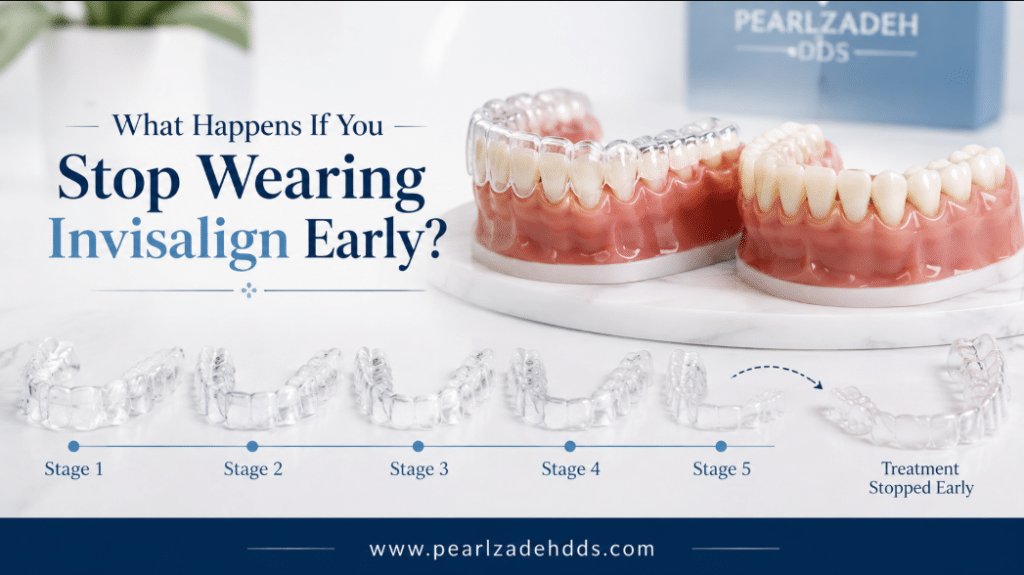
Maybe the aligners started rubbing against your cheek, so you took them out one night and meant to put them back in. Then three weeks went by. Maybe your teeth already look pretty straight, so those last few trays sitting in their box feel optional. Or maybe you lost one on a trip, planned to deal with it when you got home, and never quite got around to it.
None of that means your treatment is ruined. It also doesn’t mean nothing happened while you weren’t wearing your aligners. What happens if you stop wearing Invisalign early depends on how long the break lasted, where you were in treatment, and what your teeth are doing now.
There isn’t one answer for every situation. There is, however, a sensible way to figure out what your next step should be.
What Counts as Stopping Early?
This covers more situations than people expect. Some patients stop after three or four aligners. Others make it halfway through treatment and lose momentum. Some wear their trays inconsistently without ever making a conscious decision to quit.
A few days without an aligner after losing one is very different from putting the rest of your trays in a drawer. Both interrupt treatment, but the circumstances aren’t remotely the same.
A missed afternoon isn’t the same as three weeks without your aligners. There isn’t one exact cutoff where a short break suddenly becomes serious. The impact depends on your treatment stage and how your teeth have responded.
What matters is being honest about what happened. Your dentist needs that information to know what makes sense next.
What Actually Happens If You Stop Wearing Invisalign Early
Each aligner in your series is designed to move your teeth toward a specific position before the next one takes over. Stop partway through, and some of those planned movements may remain incomplete.
Some teeth may end up close to their intended positions. Others may not move as far as planned, especially when treatment involves rotations or more complex movements. A bite correction that was still in progress may also remain unfinished.
The result may not match the treatment plan your dentist originally created. Depending on how long you stop and how much your teeth shift, getting treatment back on track may also require additional time or aligners.
None of this happens instantly, and it doesn’t happen the same way for every patient. Invisalign’s resources on retainers explain why teeth can shift after orthodontic movement. The tissues supporting your teeth need time to adapt to their new positions, which is one reason retention matters after active treatment.
Active treatment moves your teeth toward their planned positions. Retention helps maintain those positions afterward. If you stop active treatment early, you may be stopping before the planned movements are complete.
If Your Teeth Already Look Straight, Are You Actually Done?
This is one of the more common reasons people stop, and it’s understandable. A smile can look noticeably straighter before treatment is actually finished.
What’s harder to see in the mirror is whether your bite has fully settled. A specific tooth may still need to rotate into position. Small spaces may still need to close. Those last few aligners may also be making smaller adjustments that aren’t obvious from the front.
Sometimes a dentist looks at your progress and agrees you’re genuinely finished early. That’s a legitimate outcome. The difference is that it’s a decision made after an evaluation, not a guess made in a bathroom mirror.
If you feel like you’re finished, bring it up with your dentist. It’s better to confirm you’re done than quietly decide to stop on your own.
A Few Days Off Versus a Few Weeks Off
A short gap, such as missing a day or two, doesn’t necessarily mean your treatment is off track. What matters is what happened during that break and where you were in treatment.
Your dentist may consider which aligner you were wearing, how long you went without it, and whether the tray still fits comfortably. They may also want to know whether your teeth feel different or whether the aligner now feels tighter or looser.
Don’t assume you should jump ahead to the next aligner. Don’t assume you should simply keep wearing the same one either. A quick call to your dentist’s office can give you a specific answer based on your situation.
A gap lasting weeks or months is a different situation. Your last aligner may no longer fit properly if your teeth have shifted during the break. The original sequence may also no longer match your current tooth positions.
Your dentist may need new scans to assess where things stand. From there, you may be able to continue with existing aligners, need replacements, or receive additional aligners based on an updated plan.
A longer break doesn’t automatically mean starting treatment from scratch. The next step depends on what your teeth look like when your dentist evaluates them.
Should You Just Put Your Old Aligner Back In?
Not without checking first. An aligner that fit perfectly two months ago may feel tight or uncomfortable if your teeth have shifted since then. It may also no longer fit the way your dentist intended.
Don’t force a tray that no longer fits properly. It may not be the right way to bring your treatment back on track.
Whether you should continue with your current aligner, return to an earlier one, get a replacement, or have new scans depends on your current tooth positions.
That’s something your dentist should determine after evaluating your teeth. It’s better to check than to make the decision yourself at the bathroom sink.
If Discomfort Is Why You Stopped
Some pressure or mild soreness can occur when you start wearing a new aligner. That usually reflects the pressure needed to move your teeth.
Sharp pain, an edge cutting into your cheek or gum, or discomfort that doesn’t improve deserves a closer look. You don’t need to push through significant or persistent discomfort just to stay on schedule.
Your dentist can check whether the problem comes from normal tooth movement, an irritating aligner edge, poor fit, an attachment issue, or another dental concern. Once they know what’s causing the discomfort, they can tell you what to do next.
If a Lost Aligner Is What Started This
Losing a tray happens more often than people admit. It usually happens somewhere between a gym bag, a restaurant napkin, and a dog that got to it first.
The instinct to wing it isn’t a great one. Wearing the previous aligner longer or skipping ahead to the next tray may not be appropriate for your situation.
The right next step depends on where you were in the sequence and how your teeth have been tracking. Calling the dental office sooner rather than later can help prevent a lost aligner from turning into a longer treatment break.
Can You Restart After Stopping?
Often, yes. However, restarting isn’t always as simple as picking up the next tray.
Your treatment plan was built around where your teeth were expected to move at each stage. That plan assumes you’ll wear the aligners consistently.
After a longer interruption, your current tooth positions may no longer match the original sequence. Some patients can resume with their existing aligners once their dentist confirms the fit.
Others may need new scans and additional aligners based on their current tooth positions.
Either way, restarting should begin with an evaluation rather than an assumption.
Does This Add to Your Treatment Time?
It can, though not automatically and not always by much. Extra aligners, a round of refinements, new scans, or an adjusted treatment plan can all add time after an interruption.
A short gap that gets addressed quickly may have little effect on the overall timeline. A longer break can take more time to correct if your teeth have shifted significantly.
There’s no fixed amount of extra time that applies to everyone. The impact depends on how long you stopped, where you were in treatment, and how your teeth have changed.
What About Your Bite?
Invisalign treatment often addresses more than how your teeth look. Your bite, or how your upper and lower teeth meet, may also be part of the treatment plan.
If you stop before those planned movements are complete, your bite may not reach the position your dentist originally planned. Your smile can look straight while some bite adjustments still need work.
That doesn’t automatically mean you’ll develop a serious bite problem. It simply means the functional part of your treatment may remain incomplete.
Refinements Aren’t the Same Thing as Stopping Early
These two situations can sound similar, but they’re quite different.
Refinements happen after a patient completes their planned aligners and still needs additional adjustments to reach the intended result. That’s a normal part of treatment for many patients and doesn’t mean anything went wrong. Our page on Invisalign refinements explains the process in more detail.
Stopping early is different. It means the original treatment sequence wasn’t completed before the patient stopped wearing the aligners.
What About Just Switching to a Retainer?
A retainer holds teeth in their current position. It isn’t designed to complete unfinished tooth movement.
If you stop active Invisalign treatment early and switch to a retainer on your own, you may be trying to hold teeth before they reach the positions planned for them. That’s why it’s worth speaking with your dentist before making that change.
The American Association of Orthodontists notes that teeth can shift when retainers aren’t worn as directed. Our explanation of retainers after Invisalign covers what retainers are designed to do after active treatment.
If you’re considering stopping Invisalign and switching to a retainer, talk with your dentist first.
Why Skipping the Next Appointment Actually Matters
Check-in appointments give your dentist a chance to see how treatment is progressing. They can compare your current tooth positions with the treatment plan, check the fit of your aligners, and evaluate your bite and attachments.
If you’ve fallen behind on your wear schedule, don’t skip the appointment because you’re embarrassed. Your dentist needs to know what happened to decide whether your current plan still fits your situation.
Being upfront can make it easier to address a problem before you spend even longer off track.
Why People Actually Stop
Discomfort. Forgetting until it becomes a habit. Travel that throws off the routine. A demanding stretch at work or school. Feeling self-conscious in a particular social situation.
Sometimes it’s losing a tray and putting off the call to the dental office. Other times, patients get tired of cleaning their aligners or simply feel their smile already looks finished.
Some patients also get frustrated with how long treatment takes. Our rundown of common Invisalign mistakes covers several of these situations from another angle.
None of these reasons are unusual. More importantly, none are reasons to hide what’s happened from your dental team. Your dentist needs the full picture to help you decide what to do next.
If You’ve Already Stopped, Here’s What to Actually Do
If you’ve already stopped wearing your aligners, don’t try to fix everything yourself. Start with these steps:
- Don’t panic. A treatment break doesn’t automatically undo all your progress.
- Don’t force an old aligner back in if it no longer fits comfortably.
- Don’t guess which tray to wear next.
- Note roughly how long you’ve gone without wearing your aligners.
- Contact your dentist and explain what happened.
- Bring your current and previous aligners if your dentist asks you to come in.
- Follow the updated instructions your dentist gives you.
The more information your dentist has, the easier it is to decide what should happen next.
When to Actually Call Your Dentist
Some situations are worth contacting your dentist about sooner rather than later:
- An aligner no longer fits properly
- You’ve gone an extended period without wearing your aligners
- You’ve lost a tray
- You’re experiencing significant or persistent pain
- Your bite suddenly feels different
- You can see that your teeth have shifted
- You’re unsure which aligner you should wear next
Other questions can usually wait until your next scheduled visit. For example, you may simply want to discuss your progress or ask whether you’re close to finishing treatment.
Not every interruption needs a same-day call. If you’re unsure what category your situation falls into, asking your dental office is a reasonable next step.
Speak With Dr. Pearl Zadeh About Your Invisalign Treatment
What happens after stopping Invisalign early depends on where your treatment stands and how your teeth have changed. Stopping early doesn’t mean everything you’ve accomplished is wasted, and it shouldn’t stop you from reaching out for help.
Dr. Pearl Zadeh, an Invisalign Premier Provider, can evaluate your current tooth positions and bite and explain what makes sense from there. Learn more about Invisalign in Woodland Hills, or reach out to discuss your treatment.
Call (818) 716-6722 or click the button below to schedule a consultation online.
Schedule a ConsultationFrequently Asked Questions
1. What happens if I stop wearing Invisalign for a few days?A short gap usually isn’t serious, but the right next step depends on which aligner you were on and how your teeth feel now. Contact your dentist rather than guessing.
2. Can I restart Invisalign after stopping?Often, yes. Your dentist evaluates your current tooth positions first, since a longer break can mean your existing aligners no longer match where your teeth actually are.
3. Will my teeth move back if I stop Invisalign early?They can, though how much varies by patient. Teeth aren’t fully stable in a new position until the surrounding gum and bone tissue has time to adjust.
4. Can I wear my old Invisalign aligners after stopping treatment?Maybe, but check with your dentist first. An aligner that fit before a break may not fit correctly anymore, and forcing it on can cause unnecessary discomfort.
5. Do I need refinements if I stop Invisalign early?Not necessarily. Refinements are extra aligners used after completing an original series to fine-tune results. Stopping early is a different situation and may call for a different solution, decided after an evaluation.
This article is for informational purposes only and is not a substitute for professional dental advice. Please schedule a consultation with Dr. Pearl Zadeh to discuss your specific situation.