
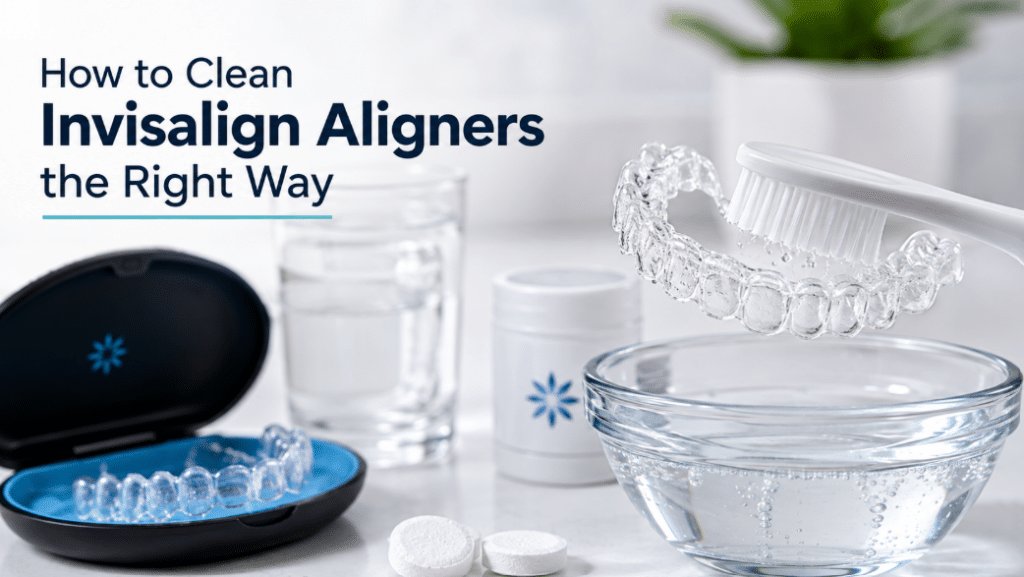
Your Invisalign aligners are designed to stay clear and discreet, but daily use can change that quickly. After wearing them for a while, many patients notice their trays look cloudy, feel less fresh, or develop an odor they did not expect.
This often leads to the same question: Am I cleaning my Invisalign aligners the right way?
Because aligners are removable, it is easy to assume they need less care than your teeth. In reality, they collect saliva, bacteria, and residue throughout the day, which means proper cleaning plays an important role in keeping them clear, comfortable, and fresh during treatment.
Why Cleaning Your Aligners Actually Matters
Your aligners sit against your teeth for roughly 20 to 22 hours a day, which means saliva, food particles, and plaque build up on them just as they would anywhere else in your mouth. Left uncleaned, that buildup can lead to bad breath, a cloudy or yellowed appearance, and a higher risk of decay along the gumline, since the aligner traps bacteria against your teeth rather than letting saliva rinse it away naturally. The American Association of Orthodontists notes that orthodontic appliances create hard-to-reach spaces where plaque and bacteria tend to collect, and that staying diligent with cleaning between visits helps prevent cavities from developing in those areas.
Clear, well-maintained aligners are also part of why many patients choose Invisalign over traditional braces in the first place. Cloudy or visibly dirty trays work against that discretion, which is one more reason cleaning matters beyond hygiene alone.
How Often Should You Clean Your Aligners?
A quick rinse every time you remove your aligners, whether for a meal, a drink, or just to brush your teeth, helps prevent buildup from settling in. Beyond that rinse, a more thorough cleaning once or twice a day is generally recommended, along with a deeper soak once daily to clear out bacteria and odor that brushing alone tends to miss. Recommendations can vary somewhat by provider, so it’s worth confirming the specific routine your dentist suggests for your aligners.
The Right Way to Clean Invisalign Aligners
A simple, consistent routine covers most of what your aligners need.
- Rinse: As soon as you take your aligners out, rinse them with lukewarm water to wash away saliva and loose debris before it dries onto the surface.
- Brush gently: Use a soft-bristled toothbrush and a clear, unscented antibacterial soap, with light pressure rather than scrubbing, since aligner plastic scratches more easily than tooth enamel.
- Soak once a day: Soak the aligners in a cleaning solution made specifically for aligners, typically for about fifteen minutes.
- Rinse again: Rinse thoroughly after soaking to remove any residue before the aligners go back in your mouth.
- Brush and floss your own teeth first: Do this before reinserting the aligners, so food particles aren’t sealed against your teeth for the next several hours.
- Store properly: Keep your aligners in their case any time they’re out of your mouth, rather than wrapped in a napkin or left loose in a bag, where they’re more likely to get lost, damaged, or contaminated.
Official Invisalign Cleaning Crystals dissolve in lukewarm water and are designed specifically for the daily soaking step, without scratching or discoloring the trays. Cleaning your case regularly matters too. A clean aligner placed back into a dirty case picks up bacteria right away, undoing the cleaning you just did.
Can You Brush Aligners With Toothpaste?
It’s best to avoid it. Most toothpaste contains mild abrasives that work well on enamel but are too rough for aligner plastic. Over repeated use, those abrasives create tiny scratches on the surface, which is exactly what makes aligners start looking cloudy or dull over time. A clear, unscented antibacterial soap does the job of cleaning without that abrasive effect, which is why it’s generally recommended over toothpaste specifically for the trays, even though toothpaste is exactly what you should keep using on your actual teeth.
What to Avoid When Cleaning Your Aligners
A handful of common products cause more harm than good here. Hot water can warp the plastic, changing the shape just enough to affect how the aligner fits, which can interfere with your treatment progressing as planned. Colored or scented soaps and dish detergents often contain dyes or fragrances that stain the plastic or leave an unpleasant taste. Mouthwash, particularly colored varieties, can discolor or degrade the material rather than clean it effectively.
Bleach and other harsh household chemicals are too aggressive for aligner plastic and aren’t designed for something you place in your mouth. When in doubt, a milder option is almost always the safer choice, and checking with your dentist before trying a new cleaning product is a reasonable habit to build.
How to Handle Cloudy, Stained, or Smelly Aligners
Cloudiness usually traces back to scratches from an abrasive cleaner, most often toothpaste, or from buildup that’s gone too long without a proper soak. Staining tends to come from colored drinks, coffee, tea, or wine consumed while wearing the aligners rather than removing them first. A persistent smell is almost always a sign of bacterial buildup that a quick rinse alone isn’t reaching.
In each case, returning to a consistent daily soak, along with gentle brushing rather than scrubbing, usually improves things noticeably within a few days. If an aligner stays cloudy, stained, or smells off despite consistent cleaning, it’s worth mentioning to your dentist rather than assuming it will resolve on its own.
How to Keep Aligners Clear Throughout Treatment
Staying ahead of buildup is easier than trying to reverse it later. Removing your aligners before eating or drinking anything other than plain water prevents most staining and food debris from ever reaching the trays. Rinsing immediately after removal, rather than setting them aside for later, keeps saliva and food particles from drying onto the surface.
A consistent daily soak, paired with gentle brushing, handles the rest. Aligners that get this routine from the start tend to stay noticeably clearer through the following weeks than ones that only get attention once they’ve already started looking dingy.
How Aligner Hygiene Connects With Brushing, Flossing, and Oral Health
Cleaning your aligners does not replace normal oral hygiene, and brushing your teeth does not replace cleaning your aligners. Both habits work together.
Brush and floss your teeth before putting your aligners back in. This helps remove food particles that could stay trapped against your teeth for hours. This matters even more with aligners because the trays hold close against the tooth surface.
Skipping either part of your routine, whether cleaning your teeth or your aligners, can lead to the same issues. These include bad breath, a higher risk of decay, and aligners that may need replacement sooner than expected.
Habits That Can Shorten Aligner Lifespan or Affect Their Appearance
Some everyday habits cause more wear and staining than many patients expect. Drinking coffee, tea, wine, or other dark or acidic beverages while wearing aligners is one of the most common issues. Chewing gum can also create problems because it may stick to the plastic and affect the aligner’s shape.
Hot water can warp the material and change the fit, even when used accidentally during cleaning. Skipping daily soaking and only rinsing your trays can also allow odors and cloudiness to build up faster. These habits will not ruin your aligners overnight, but they can affect their appearance and condition over the one to two weeks you wear each tray.
Getting Personalized Guidance From Dr. Pearl Zadeh in Woodland Hills
General cleaning guidelines cover most situations, but your dentist may recommend adjustments based on your specific aligners, your habits, or how your treatment is progressing. As an Invisalign Premier Provider, Dr. Pearl Zadeh walks patients through the care routine that fits their treatment plan during regular check-ins, rather than leaving them to guess. If you’re also weighing cosmetic treatment alongside Invisalign, our comparison of Invisalign and veneers explains how the two fit together.
You can read about her broader approach to cosmetic dentistry in Woodland Hills, learn more about her background and treatment philosophy, or hear directly from patients in our testimonials about their experience throughout Invisalign treatment
Schedule a Consultation With Dr. Pearl Zadeh
Keeping your aligners clean is a small daily habit that can make a noticeable difference in comfort, appearance, and your overall Invisalign experience. A simple routine followed consistently is usually enough to keep most common issues under control.
Dr. Pearl Zadeh and her Woodland Hills team can guide you through proper aligner care based on your treatment plan. They can also answer any questions that come up during your Invisalign journey.
Call (818) 716-6722 or click the button below to schedule a consultation online.
Schedule a ConsultationFrequently Asked Questions
1. How often should I clean my Invisalign aligners?Rinse them every time you remove them, and plan on a full soak and gentle brushing at least once a day. Your dentist can confirm the specific routine that fits your treatment.
2. Can I use toothpaste to clean my aligners?It’s best to avoid it. Toothpaste is mildly abrasive and can scratch aligner plastic over time, leading to a cloudy appearance. Use a clear, unscented antibacterial soap instead.
3. Why do my aligners smell bad?A persistent smell usually points to bacterial buildup that rinsing alone doesn’t remove. A consistent daily soak in an aligner-safe cleaning solution typically resolves it within a few days.
4. Can hot water damage my aligners?Yes. Hot water can warp the plastic enough to affect how the aligner fits, which can interfere with treatment. Always use lukewarm water for rinsing and soaking.
5. Is it normal for aligners to get a little cloudy?Some patients notice mild cloudiness even with good care. However, significant or fast-developing cloudiness often points to abrasive cleaners or infrequent soaking. Both issues can usually be fixed with better cleaning habits.
This article is for informational purposes only and is not a substitute for professional dental advice. Please schedule a consultation with Dr. Pearl Zadeh to discuss your specific situation.