
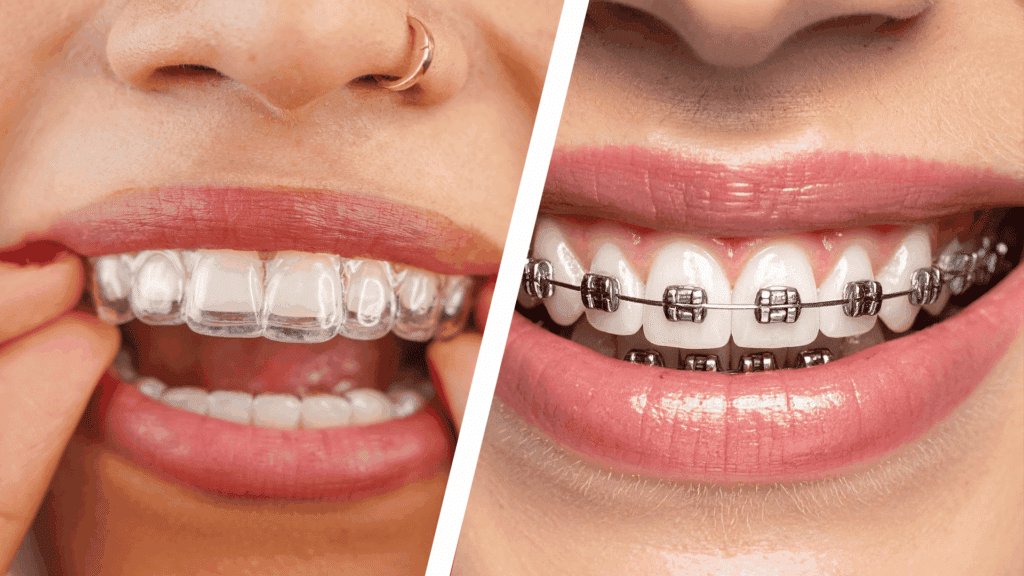
Choosing how to straighten your teeth is an important decision. Many patients compare Invisalign and traditional braces to find the best fit for their goals, lifestyle, and dental needs. Both options align teeth. Yet they differ in visibility, comfort, care routine, and case suitability. This guide breaks down the main differences so you can understand what each choice offers.
Invisalign Treatment in Woodland Hills
What Are Traditional Braces?
Traditional braces use metal brackets and wires that attach to your teeth. The orthodontist adds pressure over time to move teeth into a new position. These braces work 24 hours a day and do not rely on removal or placement by the wearer.
What Are Invisalign Aligners?
Invisalign uses a series of clear plastic trays that fit over your teeth. Each tray shifts your teeth slightly. You replace the trays every one to two weeks until treatment finishes. The aligners are removable. This lets you take them out for eating and cleaning.
Key Differences Between Invisalign and Traditional Braces
The table below shows how Invisalign and braces differ across the features that matter most to patients.
| Feature | Invisalign | Traditional Braces |
| Visibility | Almost invisible, blends with teeth | Metal brackets and wires are very noticeable |
| Comfort | Smooth plastic, rarely irritates | Brackets and wires can rub cheeks and gums |
| Removability | Fully removable for meals and cleaning | Fixed in place |
| Diet | Eat normally, no restrictions | Avoid sticky, hard, or chewy foods |
| Oral Hygiene | Easy brushing and flossing | Requires extra effort and tools |
| Complex Cases | Best for mild to moderate alignment | Handles mild to severe cases |
| Checkups | Every 6-8 weeks | Every 4-6 weeks for tightening |
| Treatment Time | Typically 12-18 months | Typically 12-36 months |
How to Take Care of Invisalign and Braces
Proper care helps treatment stay on track, protects your teeth, and ensures a healthy smile.
Invisalign Care
- Rinse trays before and after wearing.
- Brush teeth and aligners at least twice a day.
- Avoid sugary drinks while wearing aligners.
- Store trays in their case when not in use to avoid loss or damage.
- Wear aligners 20-22 hours per day for consistent progress.
Braces Care
- Brush carefully around brackets and wires after each meal.
- Use floss threaders or special brushes to clean between teeth.
- Avoid hard, sticky, or chewy foods that can break brackets.
- Attend regular orthodontist visits for adjustments.
Following these steps ensures treatment progresses smoothly, teeth remain healthy, and your final smile looks natural.
Schedule Your Consultation
At Pearl Zadeh DDS, we help you choose the best option for your smile based on your lifestyle, aesthetic preferences, and dental needs. Invisalign provides a discreet, flexible solution for adults and teens who want clear, removable aligners. Traditional braces remain the most effective choice for patients who require strong, constant pressure to correct more complex tooth movements.
During a consultation, Dr. Zadeh evaluates your bite, spacing, and facial structure. She then creates a treatment plan tailored to your goals and oral health, ensuring predictable, natural results.
Schedule a ConsultationFrequently Asked Questions (FAQ)
1. How do I know if Invisalign is right for me?Dr. Pearl Zadeh evaluates your bite, tooth alignment, and oral health during a consultation. Invisalign works well for mild to moderate cases, while more complex shifts may require traditional braces. She will recommend the option that meets your goals safely and effectively.
2. How long does Invisalign treatment usually take?Treatment typically lasts 12-18 months, depending on your teeth and alignment needs. You will wear each tray for one to two weeks and attend regular check-ins to ensure your smile progresses as planned.
3. Can I eat normally with Invisalign?Yes. Invisalign aligners are removable, so you can eat and drink without restrictions. Simply remove your trays before meals and brush your teeth before putting them back in. This makes maintaining oral hygiene much easier compared with traditional braces.
4. Will Invisalign feel uncomfortable?Some pressure or slight soreness may occur when switching to a new tray, which is normal and signals that your teeth are moving. The smooth plastic trays rarely irritate gums or cheeks, making Invisalign more comfortable than metal braces for most patients.
5. Can I straighten my teeth without anyone noticing?Yes. Invisalign aligners are clear and fit snugly over your teeth, making them nearly invisible. Most people will not notice you are wearing them, allowing you to maintain confidence while your teeth gradually move into place.