
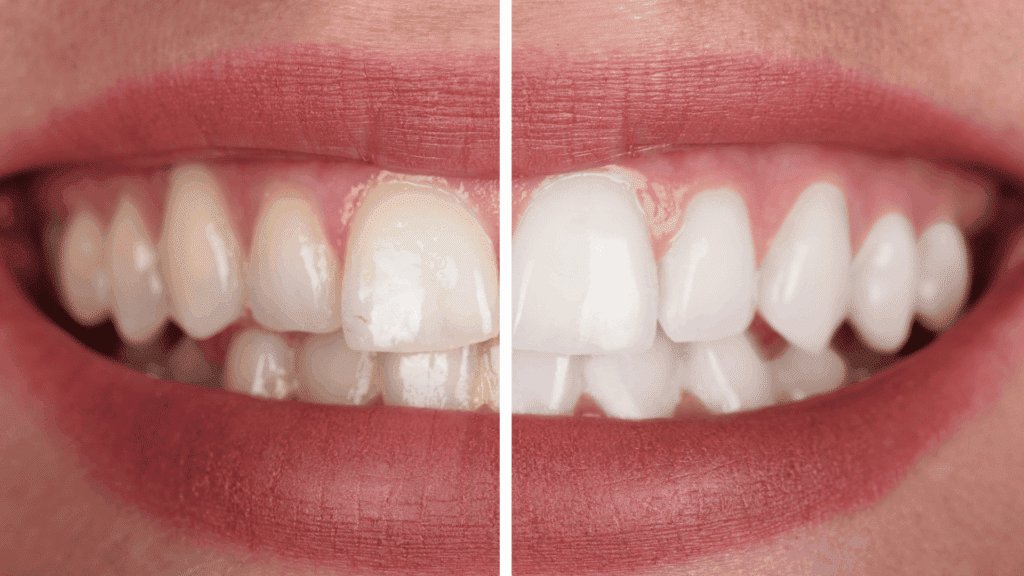
Many people want a brighter smile, but choosing between in‑office teeth whitening and at‑home products can be confusing. Each approach has pros and cons, and the right choice depends on your goals, time, and the level of improvement you want.
According to a national survey by the American Academy of Cosmetic Dentistry, most adults value a bright smile. In that study, 96% said an attractive smile makes someone more appealing, and 74% believe an unattractive smile can hurt career success. This shows why effective teeth whitening matters for both confidence and appearance.
What In‑Office Teeth Whitening Involves
In‑office whitening takes place under the supervision of a dental professional. A dentist or trained hygienist applies a strong whitening gel to your teeth and may use a light or laser to enhance the effect. Before treatment, your teeth are cleaned to remove surface build‑up and protect your gums.
This method delivers results quickly. After one session, many patients see several shades of improvement. Because a dentist controls the process, the treatment stays safe and precise.
According to dental sources, professional teeth whitening tends to deliver more consistent and noticeable results than over-the-counter options because dental professionals use higher-strength whitening agents and apply them under careful supervision. That makes in‑office whitening a reliable choice if you want effective teeth whitening with minimal guesswork.
Common At‑Home Whitening Options
At‑home whitening includes over‑the‑counter strips, whitening trays, toothpaste, and kits you can buy without a prescription. These products use milder bleaching agents compared with professional gels.
Some patients like at‑home options because they are easy to use and more affordable upfront. Whitening strips and gels attach directly to the teeth and slowly lift stains over days or weeks.
However, because the whitening strength is lower, at‑home kits usually take longer to show visible improvement. Results vary widely from person to person, and some products may not change the shade of deeper stains.
Key Differences Between the Two Approaches
| Aspect | In-Office Teeth Whitening | At-Home Whitening Options |
| Speed of Results | Noticeable improvement often appears after a single visit. | Results usually take one to four weeks of daily use. |
| Whitening Strength | Uses stronger formulas that lift deeper stains from enamel. | Uses milder agents to reduce irritation risk. |
| Supervision and Safety | A dental professional oversees the process and manages sensitivity. | No professional supervision, which may lead to uneven results. |
| Cost | Higher upfront cost due to professional care and materials. | Lower initial cost but may require repeat purchases. |
Who Benefits Most From Each Option
In‑office whitening suits people who want fast, predictable improvement, especially before a big event such as a wedding or graduation. It also works well for deeper stains that don’t respond to milder products.
At‑home whitening fits those who want gradual change and prefer a lower initial cost. It may be a good step if your staining is mild or you want to maintain brightness between professional sessions.
Caring for Your Whitening Results
After any whitening treatment, good habits help your results last longer. Brush and floss daily, limit coffee or red wine that can stain teeth, and schedule regular dental cleanings. Research shows that professional teeth whitening results may last from six months up to two years or more, depending on your daily habits and care.
Start Your Teeth Whitening Journey
If you are thinking about teeth whitening, the best place to start is with a professional consultation. A dental visit helps you understand which whitening option fits your needs, how much improvement you can expect, and how to maintain your results.
At Pearl Zadeh DDS, patients receive clear guidance and in-office teeth whitening designed to brighten smiles safely and effectively. Scheduling a visit gives you the chance to ask questions, review your options, and move forward with confidence.
Book a consultation today and take a simple step toward a whiter, healthier-looking smile.
Schedule a ConsultationFrequently Asked Questions (FAQ)
1. Does in‑office whitening hurt?Most patients feel little to no discomfort. Some people notice temporary sensitivity, which often fades within a few days.
2. Will whitening work on old dental work like crowns?Whitening affects natural enamel but does not change the shade of crowns, veneers, or fillings.
3. Can at‑home kits replace professional whitening?At‑home kits can improve mild stains, but they usually do not match the depth of whitening that in‑office treatment provides.
4. How long will the whitening results last?Results from in‑office whitening can last several months to over a year, depending on your diet, oral habits, and follow-up care. Regular brushing and limiting stain-causing foods help maintain brightness.
5. Are there any risks with in‑office whitening?When performed by a dental professional, in‑office whitening is generally safe. Some patients may experience temporary tooth sensitivity or mild gum irritation, which usually goes away within a few days.